Is a PVC Ceiling Waterproof? Porches, Walkways and Wet Rooms
Yes, PVC is a waterproof material, which is why it suits porches, walkways, bathrooms and kitchens. Here is what that means in practice, where it helps most, and what a waterproof ceiling still cannot do.

Introduction
The short answer: the panel is waterproof, but a ceiling is not a roof
People search "waterproof ceiling" for one reason. Something above them keeps getting wet, and they want a ceiling that will not stain, peel or sag because of it.
PVC is a waterproof material, so a PVC ceiling handles rain spray, steam and damp air far better than plaster or painted board. But "waterproof" has limits that are worth knowing before you spend money.
This guide explains what a waterproof PVC ceiling does, where it makes the biggest difference, and where it will not help.
What "Waterproof" Means for a PVC Ceiling
The material does not absorb water
PVC does not soak up water. Spray, splashes and condensation sit on the surface and can be wiped away. The panel does not go soft, swell or crumble when it gets wet, which is what usually ruins plaster and some boards in damp spots.
The finish is part of the panel
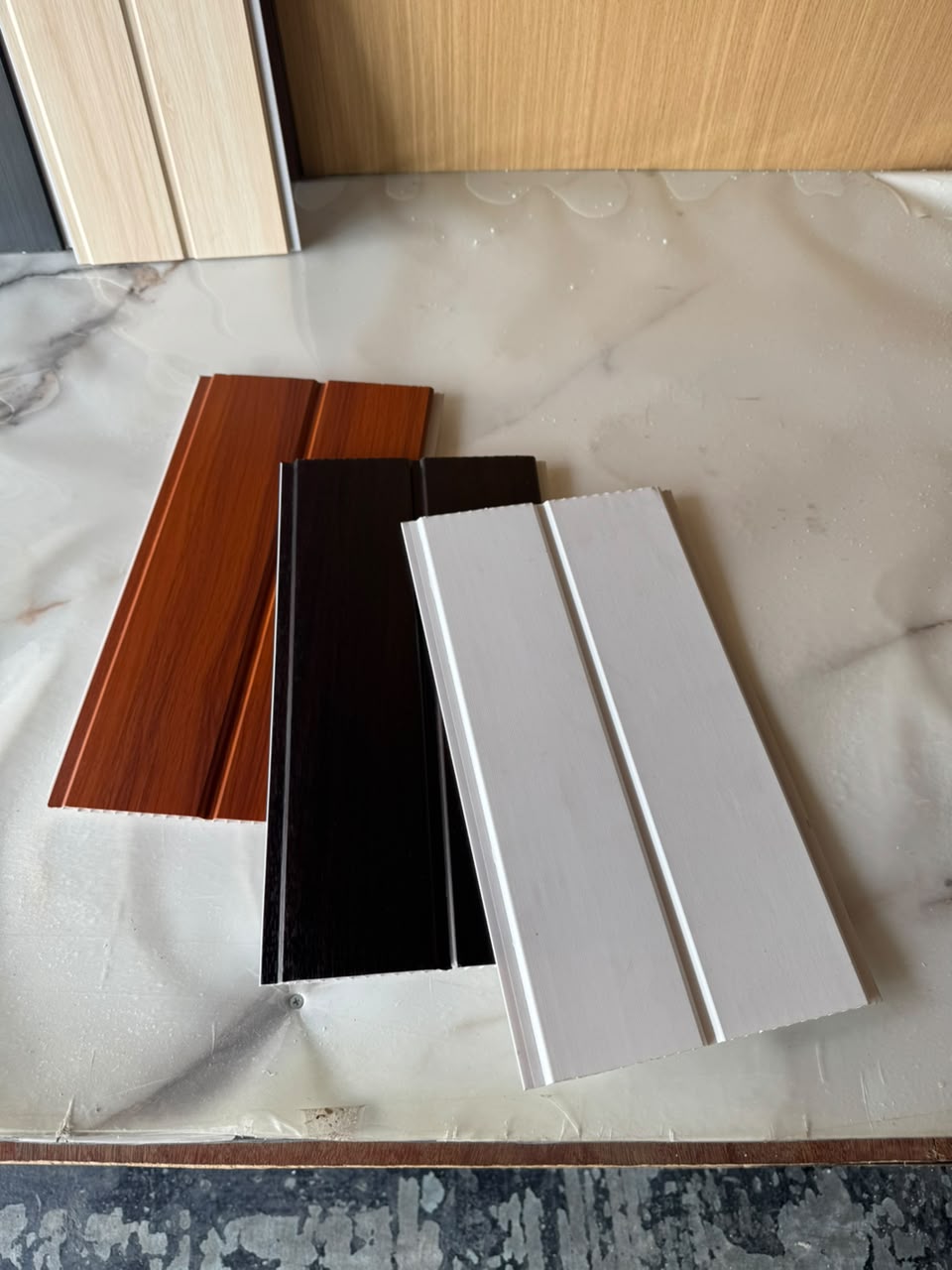
A PVC ceiling panel comes with its woodgrain or plain finish already on the face. There is no layer of paint to blister in the damp, and nothing to repaint.
What waterproof does not mean
A ceiling is made of separate strips joined side by side, with trims at the edges. The joints are neat, but they are not sealed like a roof or a shower tray.
- It will not stop a roof, gutter or pipe leak. Water from above still drips through the joints.
- It does not replace a roof over an open area. PVC ceiling goes under a roof, not in place of one.
- It does not stop condensation forming in a closed, steamy room. That needs ventilation.
Where a Waterproof Ceiling Makes the Most Difference
Car porches
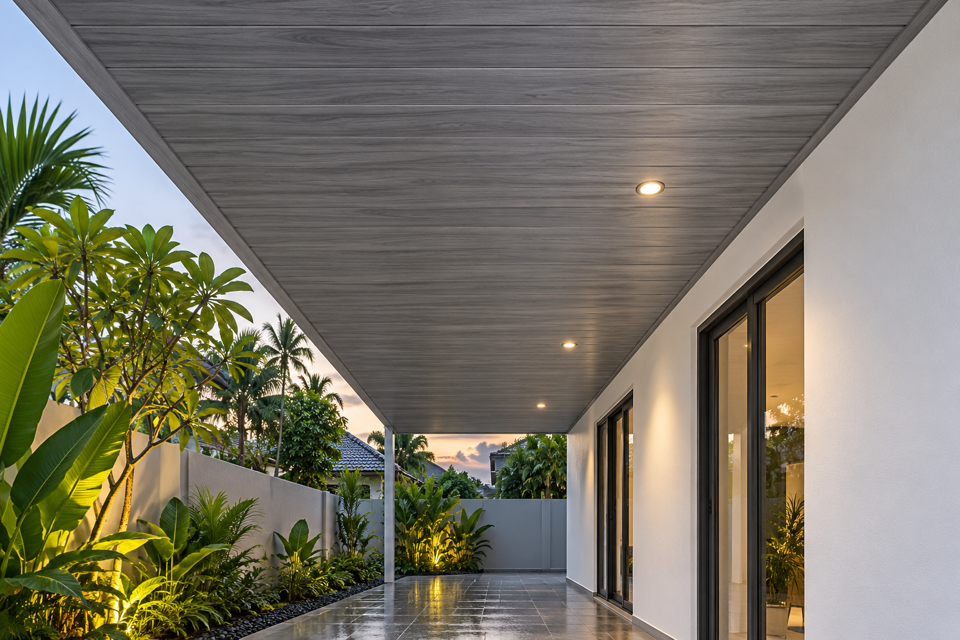
The front of a porch ceiling catches wind-driven rain in every storm, and it sits in damp air the rest of the time. Read Car Porch Ceiling: Why PVC Suits Malaysian Rain for finish and planning tips.
Walkways and side lanes
Covered walkways along the side or back of a house are open on at least one side. Spray reaches most of the ceiling, not just the edge. Our guide to outdoor ceilings for the porch and walkway compares the options.
Bathrooms and toilets
Showers fill a small room with steam every day. A waterproof ceiling copes with that, and its surface wipes clean. See PVC Bathroom Ceiling: What to Know Before You Install.
Kitchens, especially the wet kitchen
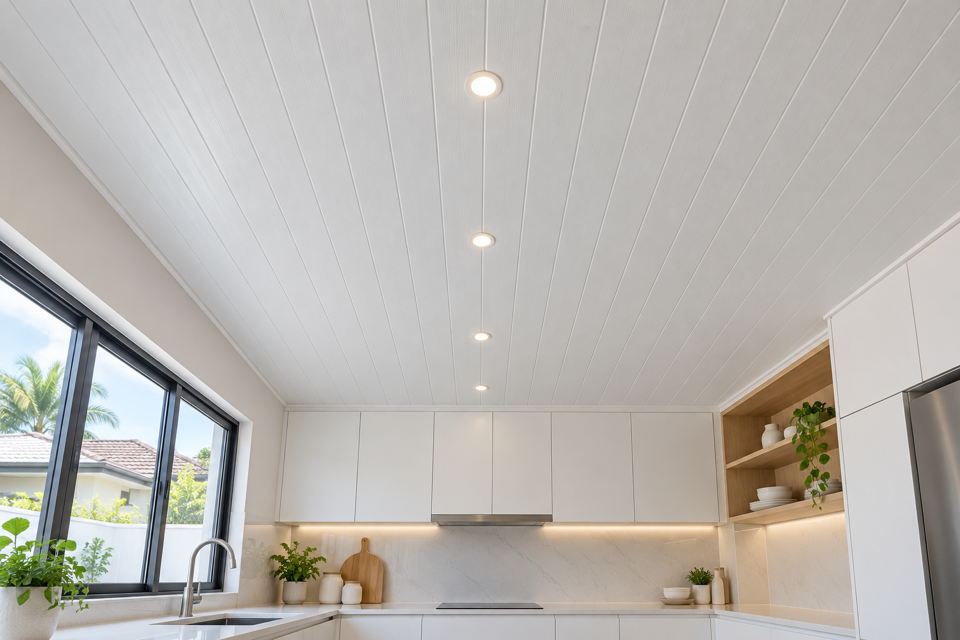
Many Malaysian homes cook in a wet kitchen at the back, with boiling, steaming and frying every day. Steam and oil settle on the ceiling, so a surface you can wipe down makes a real difference.
Waterproof Ceiling Panels vs Other Ceiling Materials
Plaster and gypsum board
Plaster gives a smooth, seamless look indoors, and it is the right choice for many dry rooms. It does not cope well with regular moisture, though, which is why stains and peeling usually start in porches, bathrooms and kitchens. PVC Ceiling vs Plaster Ceiling compares the two in detail.
Painted boards and timber
Painted boards and timber can be used in covered outdoor spaces, but the paint or varnish needs renewing to keep moisture out. In a humid climate that upkeep comes round often.
PVC ceiling panels
PVC is waterproof, its finish is built in, and it wipes clean. The trade-off is the look: a PVC ceiling shows narrow parallel lines rather than one seamless surface. Many people like that linear look, especially in woodgrain, but it is worth knowing before you choose.
Getting the Most From a Waterproof Ceiling
Fix the source of water first
If the old ceiling has stains, find where the water is coming from and fix it before the new ceiling goes up. Leaking or Sagging Ceiling? explains what to check.
Ventilate wet rooms
An exhaust fan in the bathroom and a hood in the kitchen keep steam from hanging around. The ceiling stays drier and so do the walls.
Close every edge with matching trims
Open panel ends and rough edges collect dust and look unfinished outdoors. Matching L, U and H trims close the edges, corners and joints in the same finish as the panel.
Choose a finish for the space
Woodgrain finishes such as 105 Alder and 114 Grey Teak suit porches and walkways. The plain 108 White keeps bathrooms and kitchens bright. Browse all six in the PVC ceiling collection.
Get a Waterproof Ceiling Quotation
Tell us which area you want to cover, its rough size, and send a few photos. We reply with finish advice and an itemised quotation that lists panels, trims, installation and any additional work separately. The PVC ceiling price guide shows how each line is worked out.
👉 WhatsApp us your area and photos
Homes in monsoon-heavy towns such as Kota Bharu, Kuala Terengganu and PVC ceiling in Sibu deal with wet porches every year, and so do most landed houses elsewhere.
Conclusion
A PVC ceiling is waterproof in the way that matters for a ceiling: the panel does not absorb water, its finish does not peel, and it wipes clean. That makes it a strong choice for porches, walkways, bathrooms and kitchens.
It is not a roof and it is not a leak repair. Fix the water source, ventilate wet rooms, and close every edge with trims, and a waterproof ceiling will look the way you want it to.
FAQ
Is a PVC ceiling 100% waterproof?
The PVC panel itself is waterproof. The ceiling as a whole is a set of strips with joints, so water from a leak above can still drip through. Fix leaks before installing.
Can rain damage a PVC ceiling?
Rain spray under a porch or walkway roof sits on the surface without soaking in. A PVC ceiling should still be under a roof, not exposed to direct rain.
Is PVC ceiling good for a wet kitchen?
Yes. It is waterproof and easy to wipe, which suits the steam and oil of a wet kitchen. A plain white finish keeps the kitchen bright.
Do waterproof ceiling panels need special trims?
They use matching L, U and H trims to close edges, corners and end joints. The trims you need depend on the layout, and each is listed in the quotation.