Leaking or Sagging Ceiling? When to Replace It with PVC
A stained or sagging ceiling means water is getting in above it. Fix the source first, then decide whether to repair or replace. This guide shows how to tell, and when replacing the old ceiling with PVC makes sense.
Introduction
What is your ceiling trying to tell you?
A brown ring after heavy rain, paint that bubbles, a board that bows a little more each month: these are signs that water is getting somewhere it shouldn't.
The first instinct is to replace the ceiling. But a new ceiling under an active leak only hides the problem for a while. This guide covers what to fix first, how to choose between repair and replacement, and when switching to PVC makes sense.
Signs of a Leaking or Sagging Ceiling
- Brown or yellow water stains, often in rings
- Bubbling, peeling or flaking paint
- Boards that sag or bow between the frame
- Cracks opening along board joints
- A damp, musty smell or dark spots of mould
- Drips or wet patches during heavy rain
A stain that grows after every downpour points to an active leak. A single old stain that has not changed may come from a leak that was already fixed.
Common Causes in Malaysian Homes
Roof and gutter problems
Cracked or shifted roof tiles, worn flashing and blocked gutters are the usual suspects. In monsoon season, especially on the east coast and in Sabah and Sarawak, a gutter full of leaves can overflow back under the roof edge.
Aircond and plumbing leaks
A blocked or loose aircond drain pipe can drip onto the ceiling for a long time before it shows. In double-storey houses, a leaking pipe or worn waterproofing in an upstairs bathroom often appears on the ceiling below.
Porches and walkways
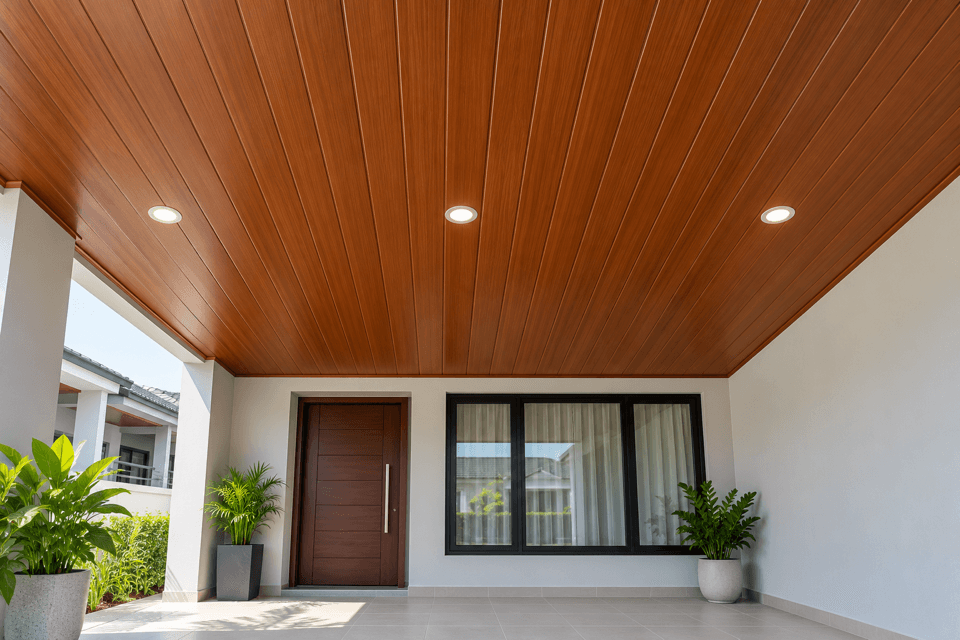
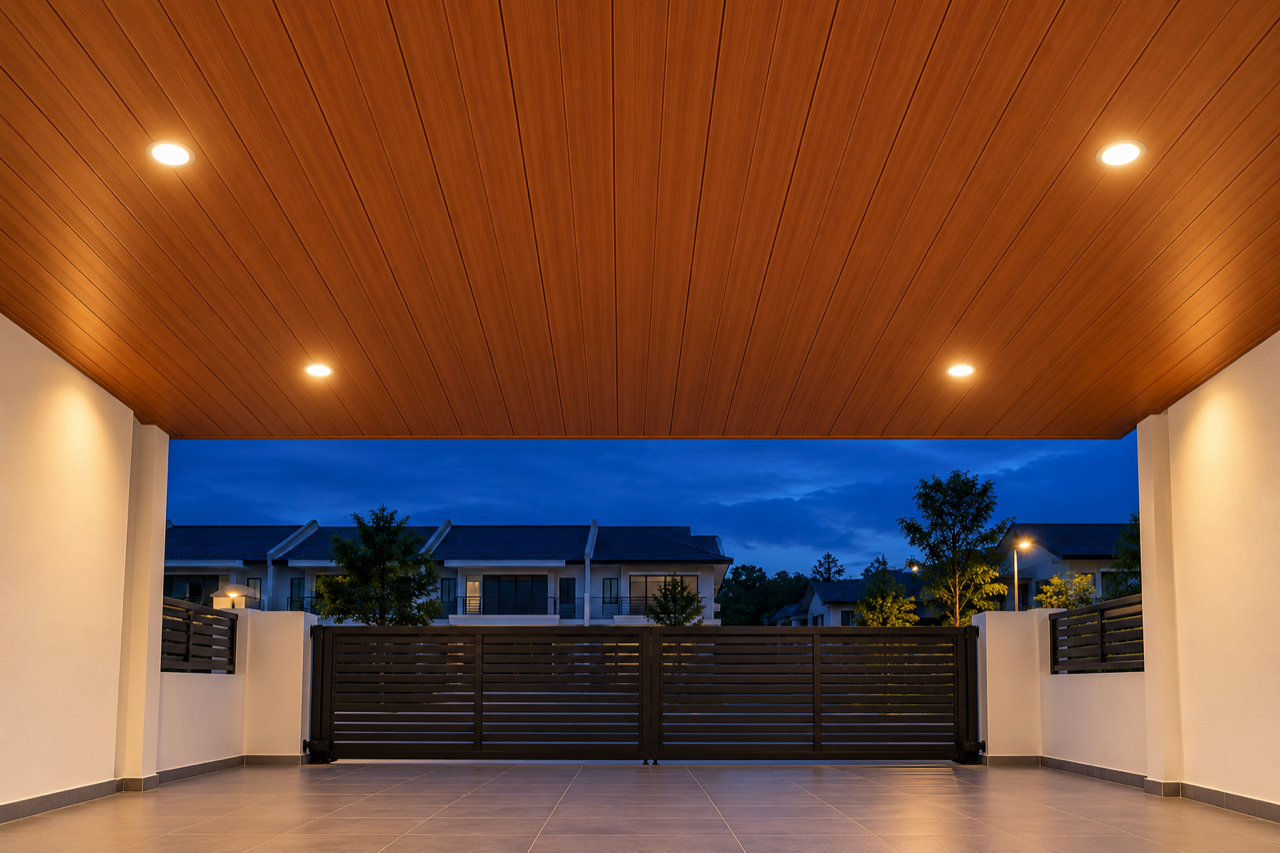
Porch ceilings take wind-driven rain and water running off the roof edge. Plaster boards on a porch often sag well before any ceiling indoors does.
Fix the Leak First, Then the Ceiling
Why the order matters
Water that keeps coming will damage any ceiling. PVC is waterproof, but it is not a roof. Water sitting on top of the panels will run to the joints, the light openings and the edges, and a timber frame above will keep getting wet.
So the order is always the same. Find the source, have it repaired by a roofer or plumber, let the area dry out, and only then deal with the ceiling.
Check the frame once it is dry
Water often damages more than the boards. Before a new ceiling goes up, the frame should be checked for rot, rust and termite damage, and any weak sections replaced.
Repair or Replace?
When a repair is enough
If the leak is fixed, the board is still firm and the stain is small, a patch and a coat of stain-blocking paint may be all you need. There is no point replacing a whole ceiling for one dry, old mark.
When ceiling replacement makes sense
Replacement is worth considering when boards are soft or sagging, stains cover a large area or keep coming back, there is mould, or the ceiling is in a wet area where plaster will struggle again. Older houses with tired, patched ceilings throughout are another common case.
A note on very old ceiling boards
Some older houses have grey fibre-cement ceiling boards, and some boards of that type made decades ago contained asbestos. If you have them, don't break, drill or sand them yourself. Have them checked before removal.
Why Replace with PVC
Where ceilings usually fail, the damage comes from moisture, and PVC does not absorb it. Steam, humidity and rain spray don't soak in, and the panels wipe clean instead of needing repainting.
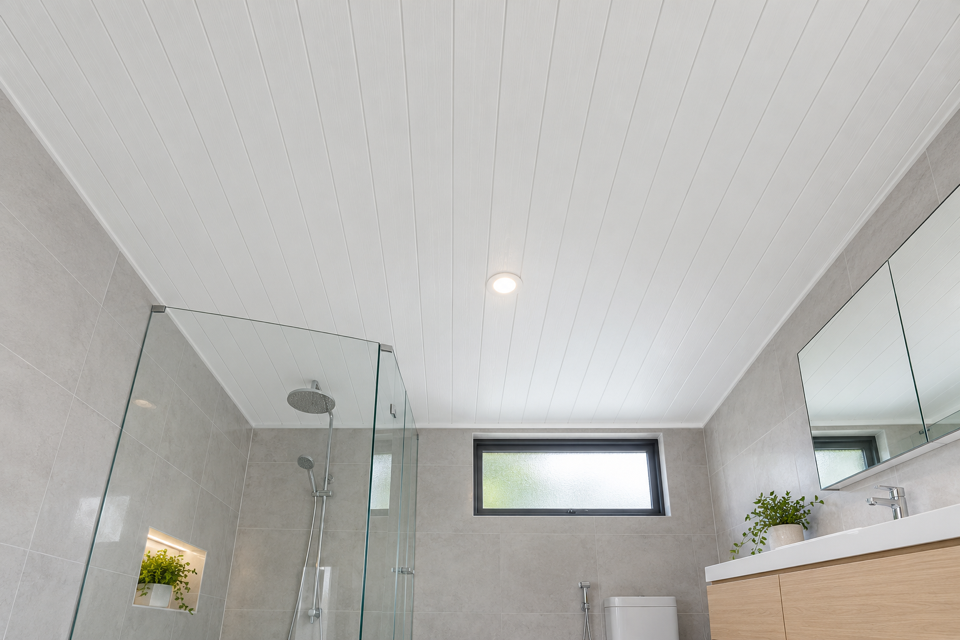
It suits the spaces that most often need a new ceiling: car porches, walkways, bathrooms and kitchens. Our guides to the PVC bathroom ceiling and waterproof PVC ceilings cover those areas in detail.
What a Ceiling Replacement Involves
- Removing the old ceiling and clearing the debris
- Checking the frame, then repairing or renewing it where needed
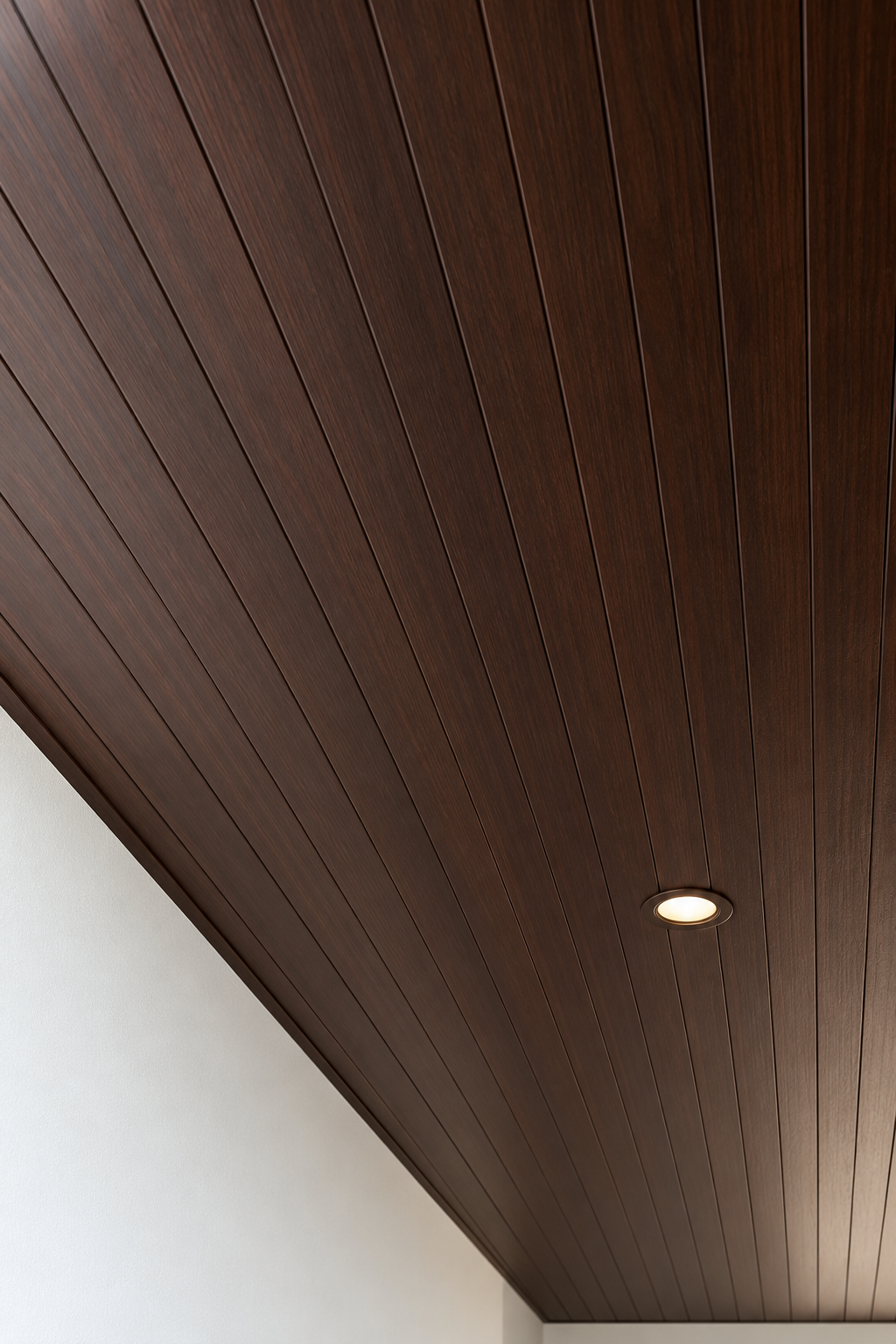
- Fitting the edge trims, then the PVC panels in your chosen finish
- Cutting openings for lights and fans, and closing every edge with matching L, U and H trims
In our quotations, removing the old ceiling and any frame work appear as additional work on their own lines, separate from panels, trims and installation. See the PVC ceiling price section, or read how a PVC ceiling quotation is worked out.
FAQ
Can I replace a leaking ceiling without fixing the roof?
You shouldn't. The new ceiling will get wet too, and the frame above will keep deteriorating. Fix the leak first.
Is a PVC ceiling waterproof?
Yes, the material is waterproof, which is why it suits porches, bathrooms and kitchens. It does not stop a roof leak, though. It only stops the ceiling itself from soaking up water.
Why is my ceiling sagging?
Usually because water has softened the boards or weakened the frame above. Sometimes the boards were fixed to a frame spaced too far apart.
Is removing the old ceiling included in the price?
Removal is listed as additional work in the quotation, so you can see exactly what it adds.
Send Us Photos of the Ceiling
WhatsApp us photos of the stained or sagging ceiling, its rough size and your location, and tell us whether the leak has been fixed.
We replace existing ceilings with PVC across Malaysia, including Kuantan, Kota Bharu and PVC ceiling in Kuching, where heavy monsoon rain puts porch ceilings to the test.
Conclusion
A leaking or sagging ceiling is a symptom. Find and fix the water source, let everything dry, and check the frame. Then decide: a small dry stain can be patched, while soft, widely stained or repeatedly wet ceilings are better replaced.
In wet and outdoor areas, PVC is the practical replacement, as long as the roof above it is sound.