PVC Ceiling vs Plaster Ceiling: Which Suits Your Home?
PVC and plaster (gypsum) ceilings each have a place in a Malaysian home. This guide compares them on moisture, maintenance, look and installation, so you can choose room by room.

Introduction
Is PVC better than plaster, or just different?
Most Malaysian homes have plaster ceilings. So when one gets stained, or a porch ceiling starts to sag, the question comes up: replace it like for like, or switch to PVC?
Each material suits different rooms. Below we compare them on the four points that matter in daily life: moisture, maintenance, look and installation. Then we go room by room.
What Each Ceiling Is Made Of
Plaster and gypsum ceilings
What most people call a plaster ceiling is usually gypsum board fixed to a frame, with the joints taped, skimmed and painted. The result is a flat, seamless surface. It can also be shaped into bulkheads, steps and recesses for cove lighting.
PVC ceilings
A PVC ceiling is made of long, rigid strips that lock together on a frame. Ours are 5950 × 200 × 8 mm with a hollow core, in woodgrain or plain finishes, with matching L, U and H trims at the edges and joints. The surface comes finished, so there is no painting.
Moisture: The Biggest Difference
Where plaster struggles
Gypsum absorbs water. A roof leak, a dripping aircond pipe or steam from a daily shower can leave brown rings, bubbling paint and eventually a sagging board. Moisture-resistant boards help, but plaster remains a weak match for spaces that get wet regularly.
Where PVC does better
PVC is waterproof, so rain spray, humidity and bathroom steam don't soak into it. That is why it is common on car porches, walkways, bathrooms and kitchens. If wet areas are your main concern, our guide to waterproof PVC ceilings goes into more detail.
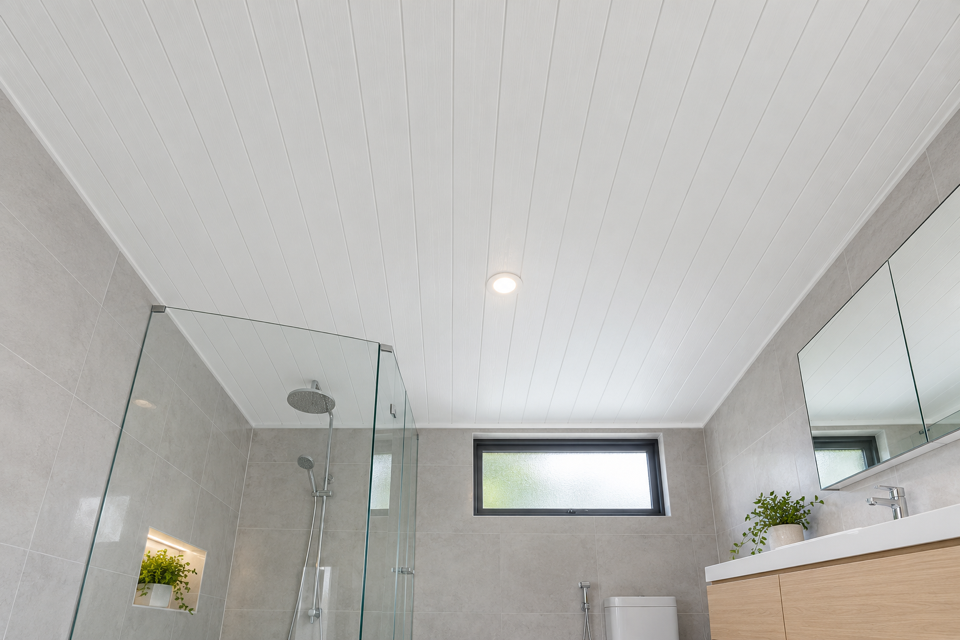
One caution: waterproof does not mean leak-proof. If water is coming through the roof, it has to be fixed at the source, whichever ceiling you choose.
Maintenance and Upkeep
Cleaning and repainting
A PVC ceiling can be wiped with a damp cloth and mild soap. There is no repainting, and most marks clean off the surface.
Plaster ceilings need repainting from time to time, and hairline cracks along board joints are common as a house settles. Small cracks and stains can be patched, but each patch has to be painted to blend in.
Repairs
On plaster, a damaged area is cut out, patched and repainted. On PVC, a damaged section is replaced with new strips in the same finish, so it is worth noting your finish code, such as 108 White or 114 Grey Teak.
Look and Design
What plaster does well
If you want a smooth, unbroken ceiling, curves, bulkheads or hidden cove lights, plaster is the better tool. Those features are built into the board and finished seamlessly, and PVC strips cannot copy them.
What PVC does well
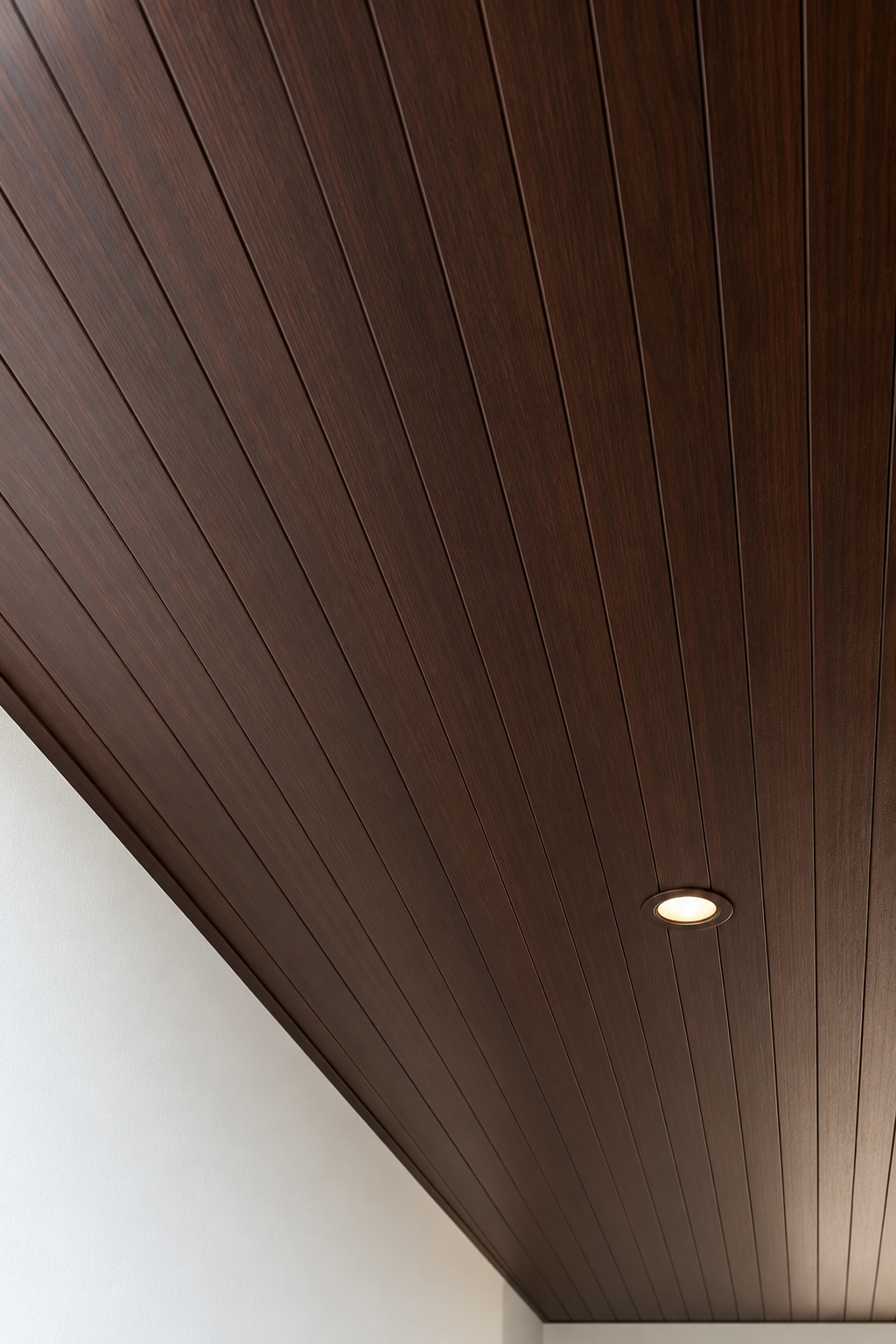
PVC gives a linear strip look with fine grooves between panels. The woodgrain finishes add warmth without real timber, and the plain finishes give a clean white or bold black ceiling. Compare them in our PVC ceiling designs, or read about woodgrain PVC ceiling finishes.
Installation
Both ceilings go up on a frame. A plaster ceiling then needs joint taping, skimming, sanding and painting, which means more dust and several stages of finishing work.
PVC strips arrive already finished. They are cut to length, locked together and closed off with trims, with no skim coat or paint stage. If you are curious about the steps, see how a PVC ceiling is fitted.
Which Should You Choose? Room by Room
- Car porch and walkway: PVC. Rain spray and humidity are part of everyday life there.
- Bathroom and toilet: PVC. Steam and splashes are constant.
- Kitchen: PVC if you want a ceiling you can wipe down. Plaster is fine in a dry, well-ventilated kitchen.
- Living and dining room: either. Plaster for bulkheads and cove lights, PVC for a woodgrain or strip look.
- Bedrooms: either, depending on the look you prefer.
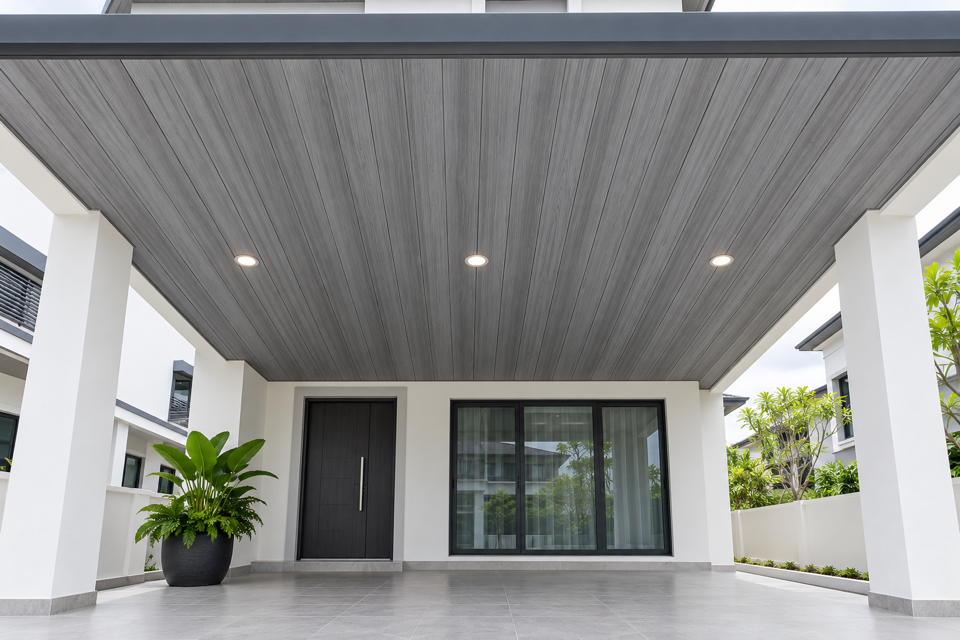
Many homes mix the two: PVC for the porch and bathroom, plaster for the rest. That is a sensible split, and nothing says a house has to use one material throughout.
FAQ
Is a PVC ceiling cheaper than a plaster ceiling?
It depends on the area, the finish, the trims and the site work, so there is no honest blanket answer. Ask for an itemised quote for each and compare line by line. Our guide to how a PVC ceiling quotation is worked out explains what to look for.
Is a PVC ceiling the same as a gypsum ceiling?
No. Gypsum is the board inside most plaster ceilings. PVC is a rigid plastic strip that needs no painting and does not absorb water.
Can PVC go over an existing plaster ceiling?
It depends on the condition of the old ceiling and the frame above it. Send photos and we will tell you whether removal is needed. If it is, it appears as additional work on the quotation.
Does a PVC ceiling look cheap?
That comes down to the finish and how neatly it is fitted. Straight lines, a level frame and matching trims at every edge are what make a PVC ceiling look finished.
Ask Us About Your Space
Not sure which suits a particular room? WhatsApp us a photo of the space and its rough size. We supply and install PVC, not plaster, so if a room is better left in plaster, we will say so.
We work across Malaysia, including Kuching, Petaling Jaya and PVC ceiling in Johor Bahru.
Conclusion
PVC is the practical pick wherever water, steam or humidity is part of daily life. Plaster is the pick when you want a seamless ceiling or shaped features indoors. Most homes end up with some of each, so decide room by room.